
Editorial and Documentary Wedding Photographer: The Perfect Blend
You Don’t Have to Choose Between Editorial and Documentary Wedding Photography
An editorial and documentary wedding photographer combines two approaches many couples initially think they must choose between: polished, stylish portraits and genuine, unscripted moments.
The good news is that you don’t have to choose one or the other.
If you’ve been comparing different wedding photography styles, you’ll often see editorial, documentary, candid and reportage photography described as completely separate approaches.
Our approach combines both. For most of the wedding day, we work quietly and unobtrusively, photographing what happens naturally. Then, when a little direction genuinely helps — particularly for portraits, family groups or when we’re working with strong architecture and light — we step in and guide you.
That means your final gallery can include natural documentary photographs alongside relaxed editorial portraits, without your wedding feeling like a photoshoot.
After photographing more than 700 weddings since 2006, this balance has become central to how Claire and I work. We want the photographs to look polished and intentional where it matters, while still feeling unmistakably like your wedding day.
Documentary vs Editorial Wedding Photography: What’s the Difference?
The main difference between documentary and editorial wedding photography is how much direction the photographer gives.
Documentary photography is also commonly described as candid, reportage or photojournalistic wedding photography. These terms overlap considerably in the wedding industry; Bridebook’s guide to wedding photography styles groups them around the same observational approach.
Documentary Wedding Photography
Documentary wedding photography captures real moments as they happen, without interrupting or recreating them.
During the ceremony, drinks reception, speeches and evening celebrations, we’re usually watching rather than directing. We’re looking for expressions, reactions, laughter, hugs and all the little interactions happening around you that would disappear if we stopped the moment to organise it.
The aim isn’t simply to take photographs when people aren’t looking at the camera. Good documentary photography is about anticipating what might happen next, choosing the right position and light, and capturing the moment without changing it.
If this side of our approach particularly appeals to you, we’ve explained it in more detail in our guide to documentary-style wedding photography.
Editorial Wedding Photography
Editorial wedding photography takes more inspiration from fashion and magazine-style photography, using light, composition and gentle direction to create more considered portraits.
That doesn’t mean stiff posing or turning your wedding into a fashion shoot.
For us, editorial direction might be as simple as choosing a better patch of light, adjusting where you stand, asking you to walk together or giving you enough guidance to stop wondering what to do with your hands.
The best editorial wedding photographs should still feel like you. They’re simply more considered than the completely unscripted parts of the gallery.
Historic venues, dramatic staircases, beautiful window light and Edinburgh’s architecture can all become part of the photograph, but the setting should support the couple rather than overwhelm them.
Why We Combine Both
A wedding isn’t one type of photographic situation from beginning to end.
Some moments are best left alone, while others benefit from a little guidance that creates a stronger photograph. Knowing when to observe and when to direct is what matters.
You may also see this blended approach described as docu-editorial wedding photography — documentary storytelling combined with more considered editorial portraits.
That balance is what we mean when we describe ourselves as an editorial and documentary wedding photographer team.
Using Your Venue, Architecture and Light
One of the biggest advantages of editorial wedding photography is that the venue itself can become part of the image.
Historic stonework, staircases, windows, archways and city streets can all help create stronger portraits, but we don’t use them just because they look impressive. The location, light and composition still need to work for the couple.
At venues such as Dundas Castle, Dunglass Estate and the Royal College of Physicians of Edinburgh, we’ll often use the architecture to frame the photograph rather than simply placing the couple in front of it.
Natural light plays a big part too. A window, doorway or patch of softer directional light can give a portrait much more depth than flat, even illumination.
The key is not to force every wedding into the same visual formula. We use what the venue and conditions give us on the day, then choose the places that best suit the couple, the light and the time available.
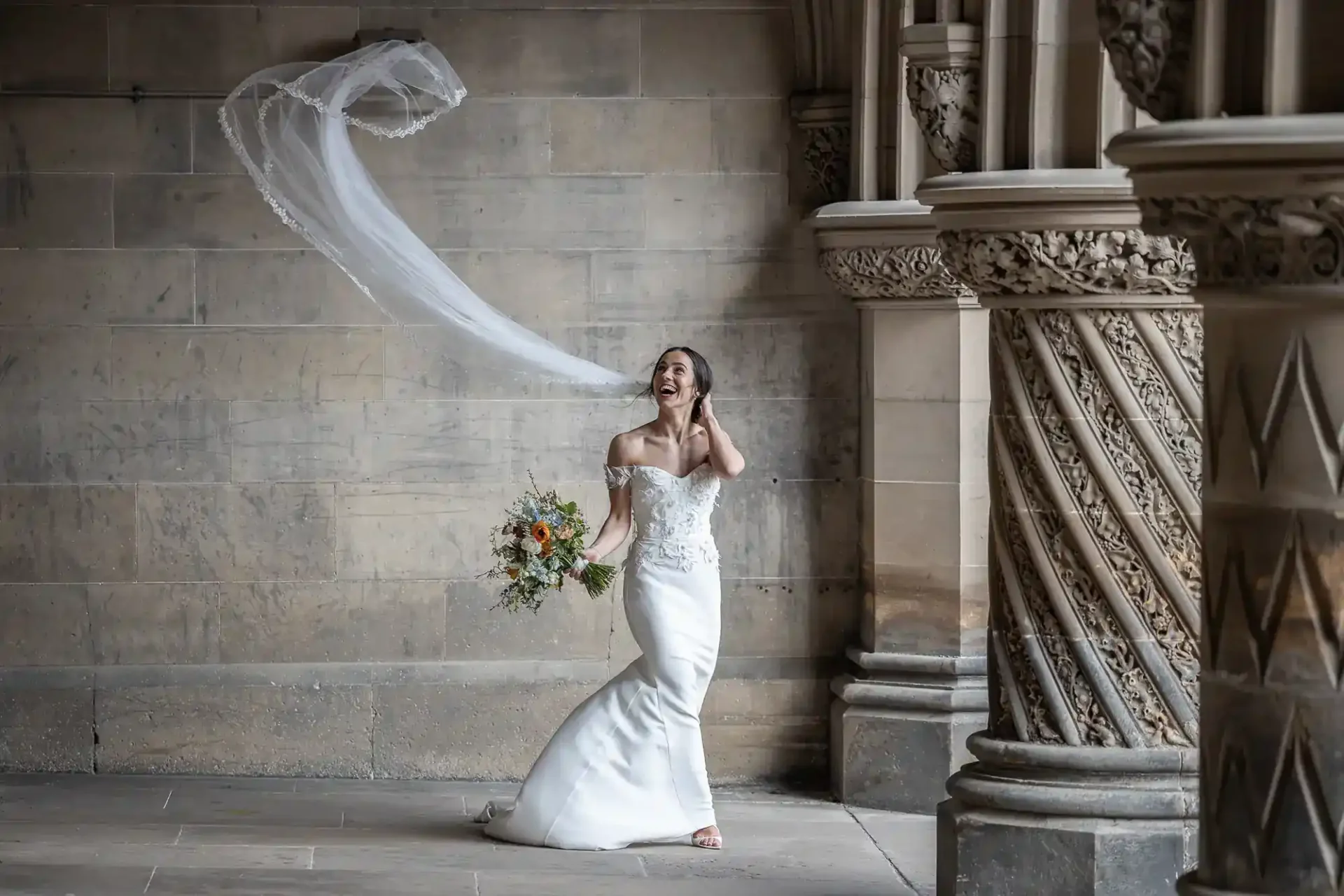
Architecture, Symmetry and Movement
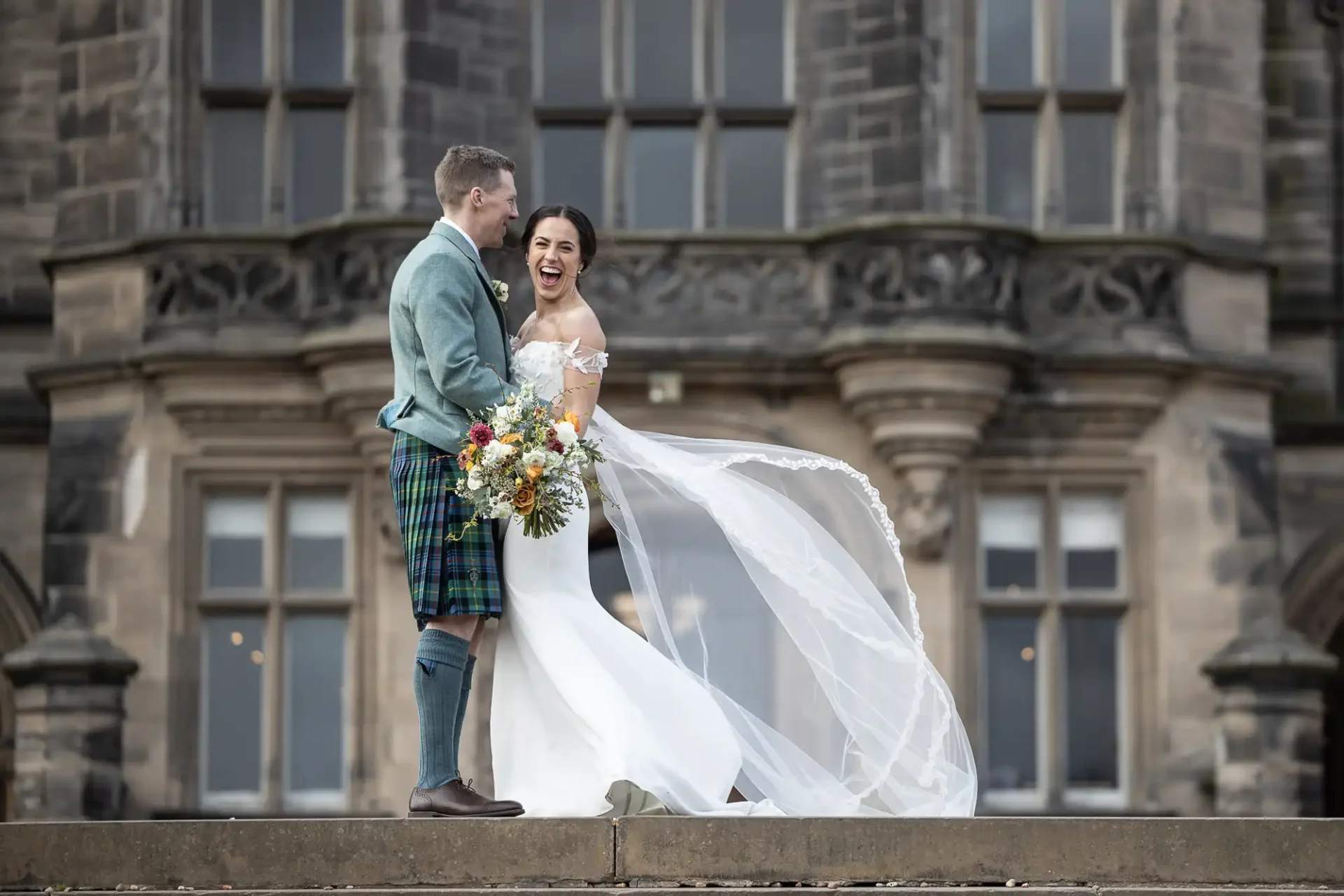
At Fettes College, the symmetry of the stone corridor gave us a naturally strong composition. Adding movement to the veil brought softness and energy into a setting dominated by heavy stone and straight architectural lines.
The photograph is directed, but it doesn’t require complicated posing—the venue and composition do much of the work.
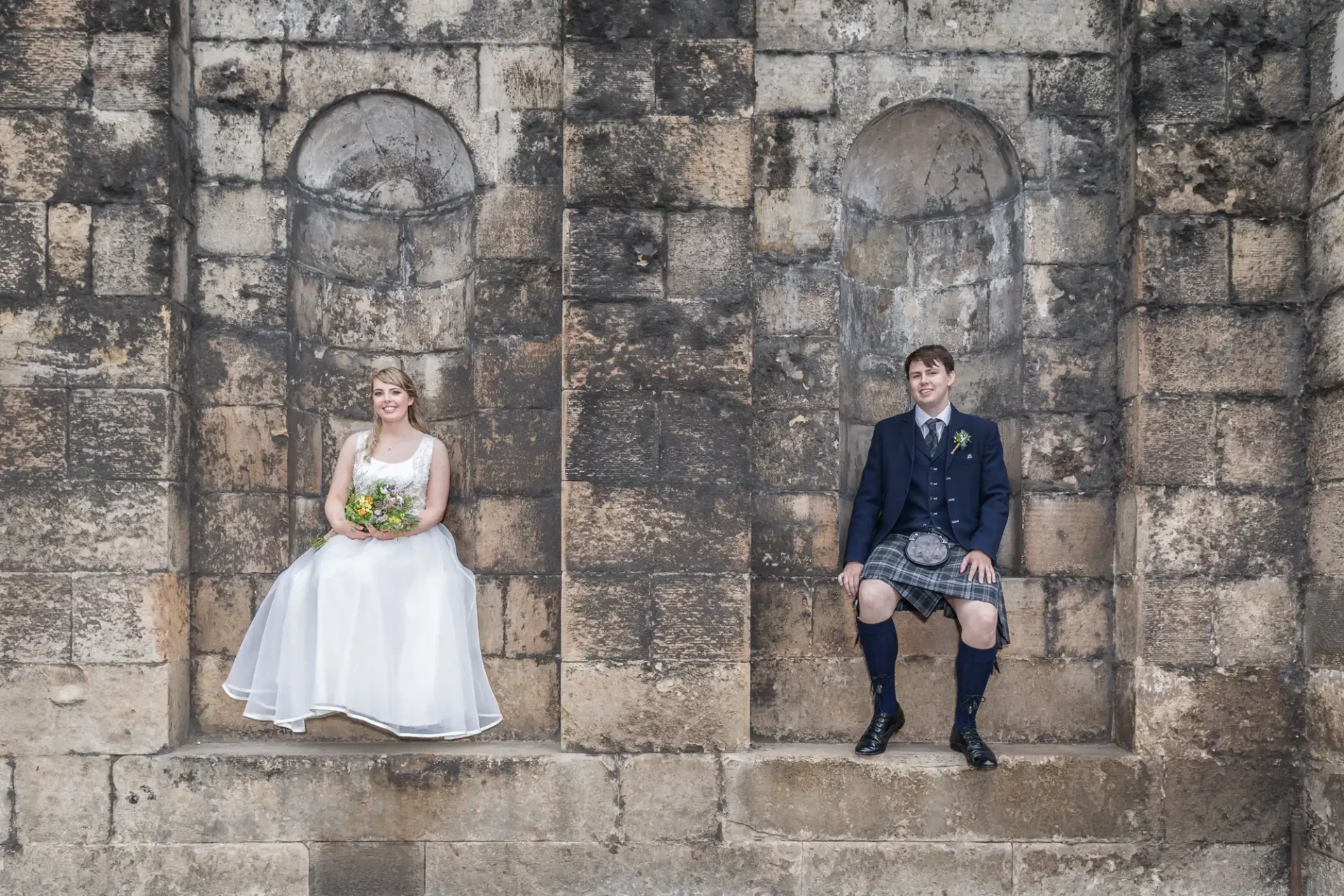
Using the Shape of a Venue
At Apex Waterloo Place, the architectural niches gave us a completely different way to frame the couple.
Rather than simply standing them together against a wall, we used the building’s existing shape and symmetry to create something more graphic and editorial.
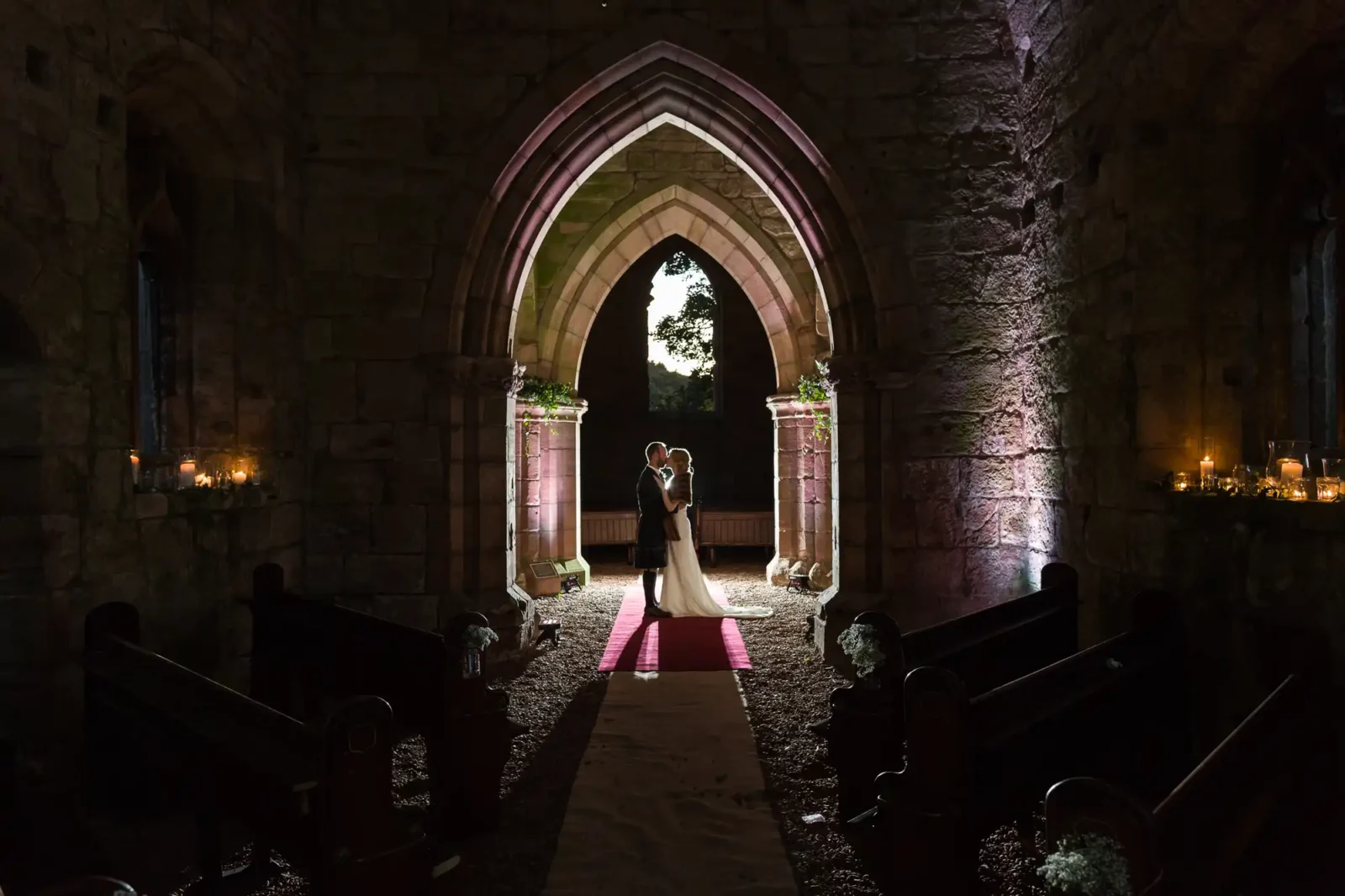
Creating Something Different After Dark
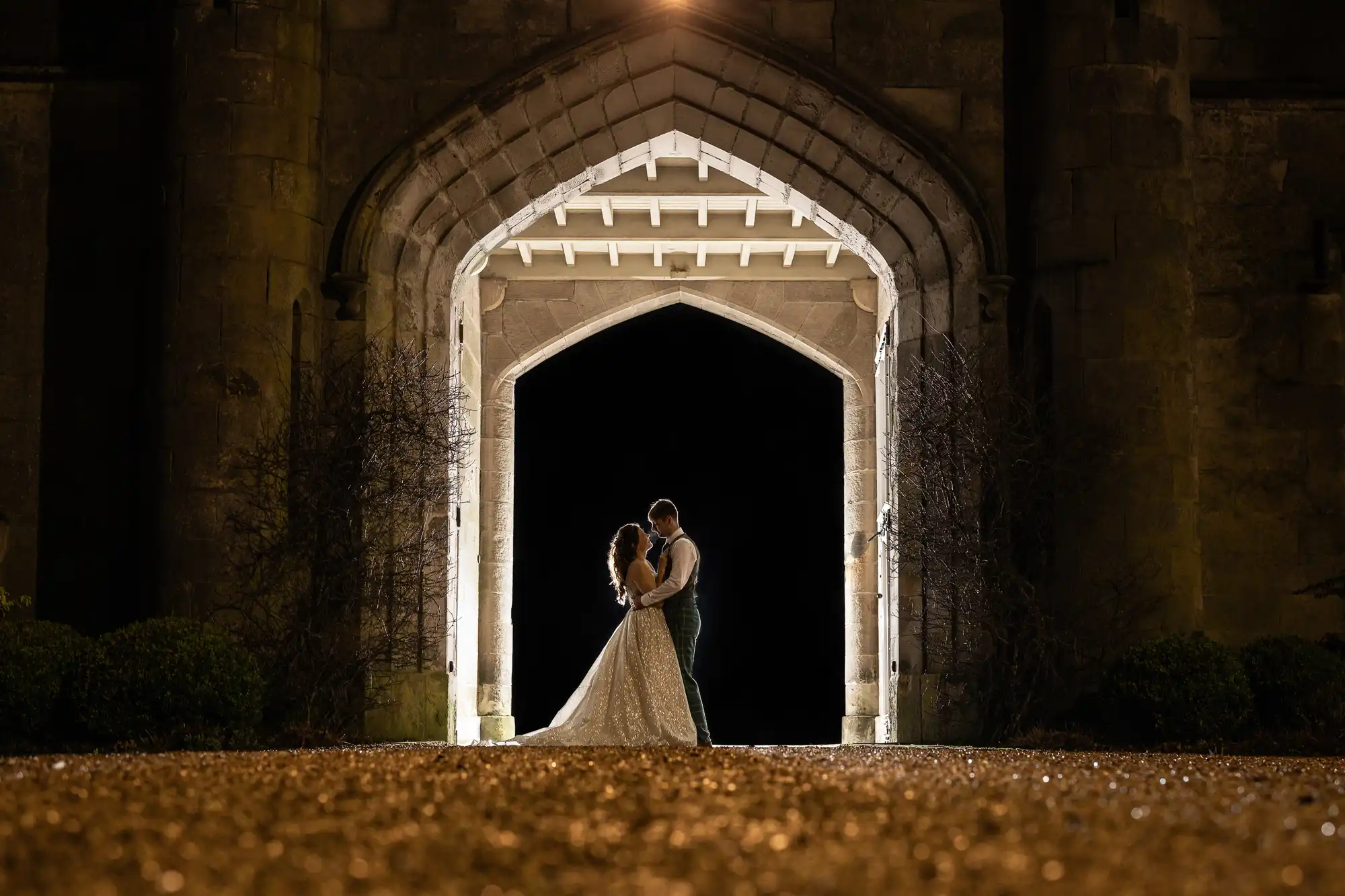
At Dunglass Estate, we used the archway and backlighting to create a simple silhouette after dark.
This is a good example of editorial photography not necessarily meaning bright fashion-style portraits. Sometimes stripping away detail and using shape, light and atmosphere creates a much stronger photograph.
The important thing is that we don’t arrive with a fixed list of photographs we recreate at every wedding. We look at the venue, light, weather and time available, then choose an approach that works for that particular couple and location.
Working With Natural and Available Light
Good light can transform a portrait, but that doesn’t always mean bright sunshine or adding lots of artificial flash.
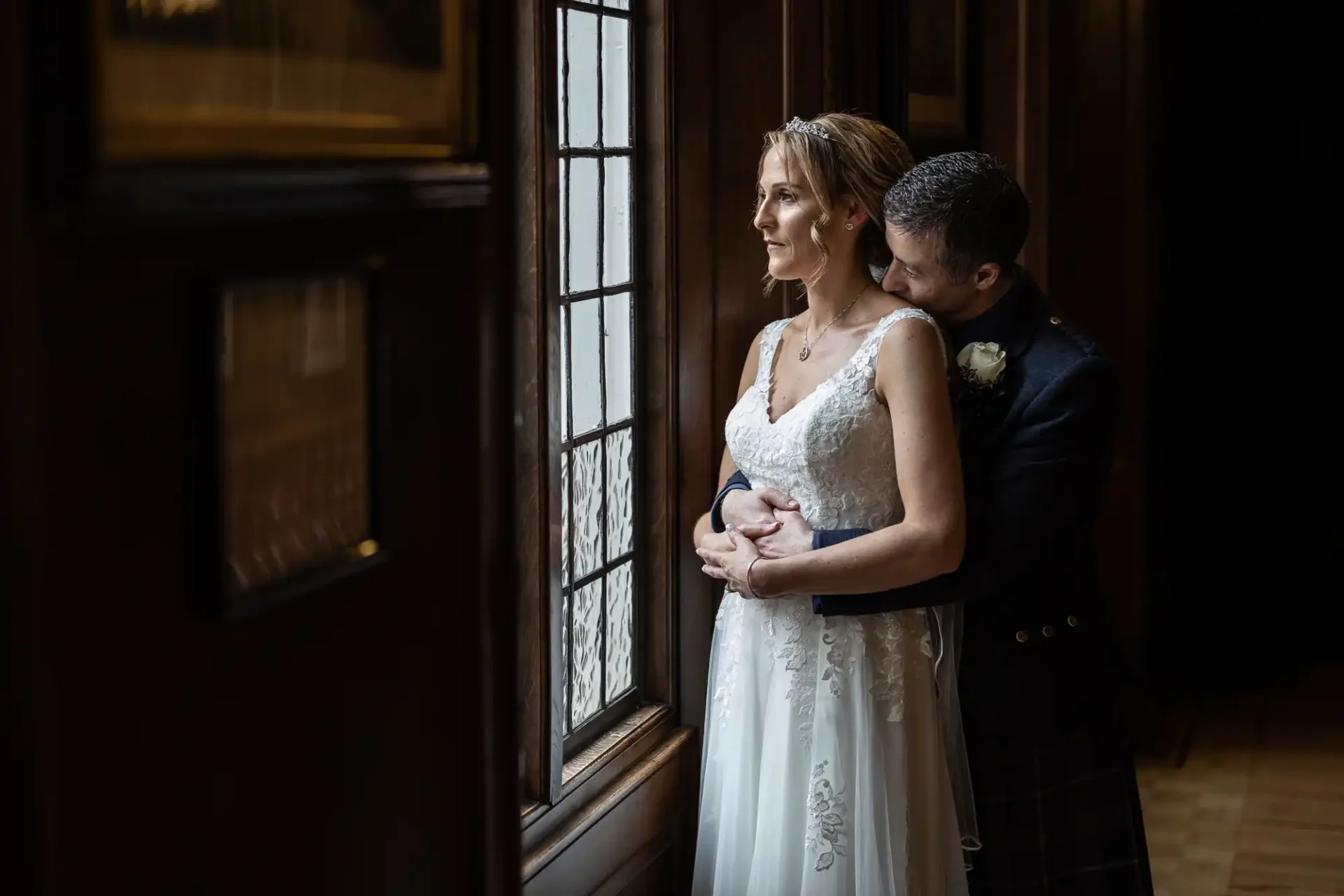
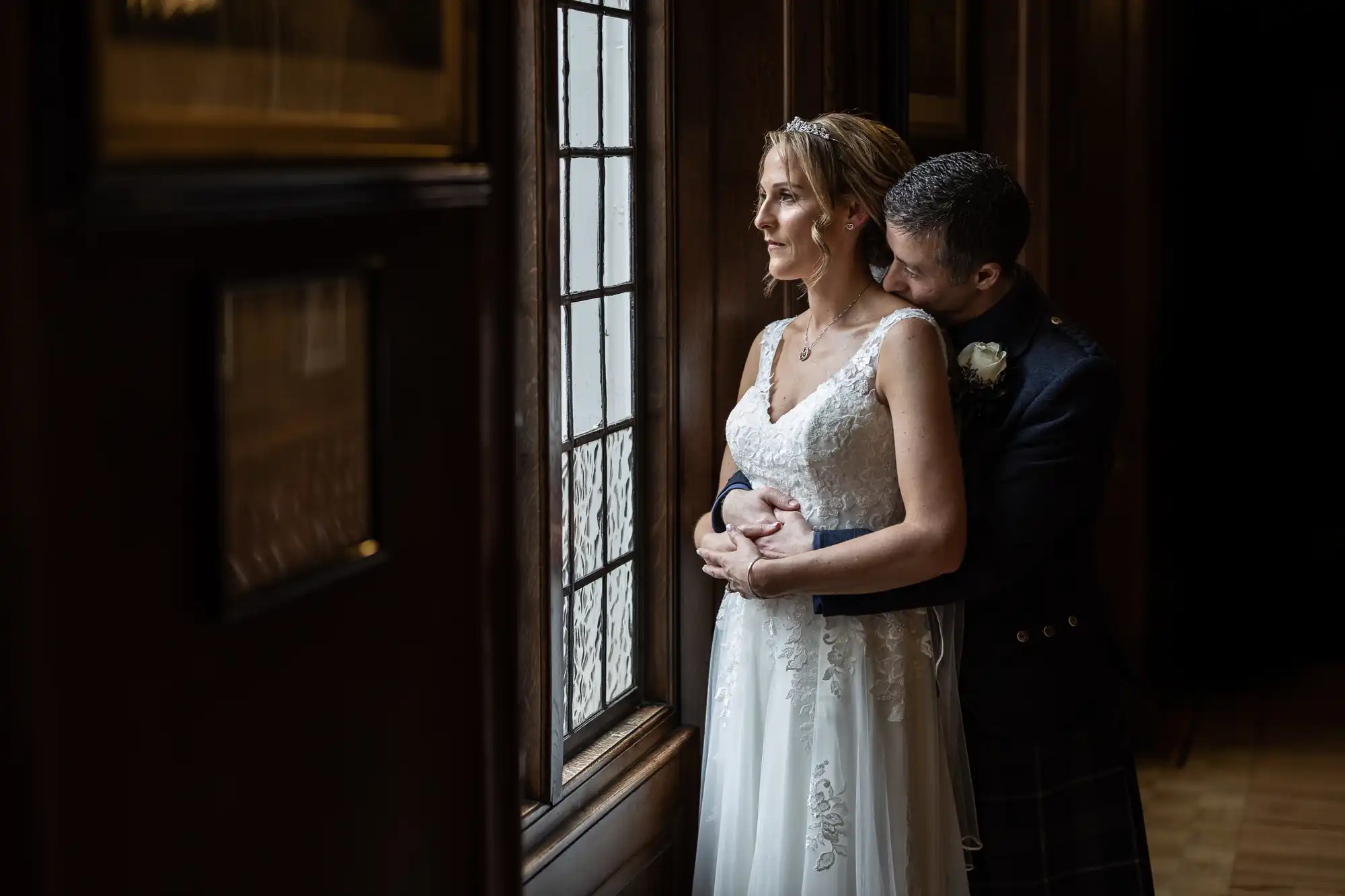
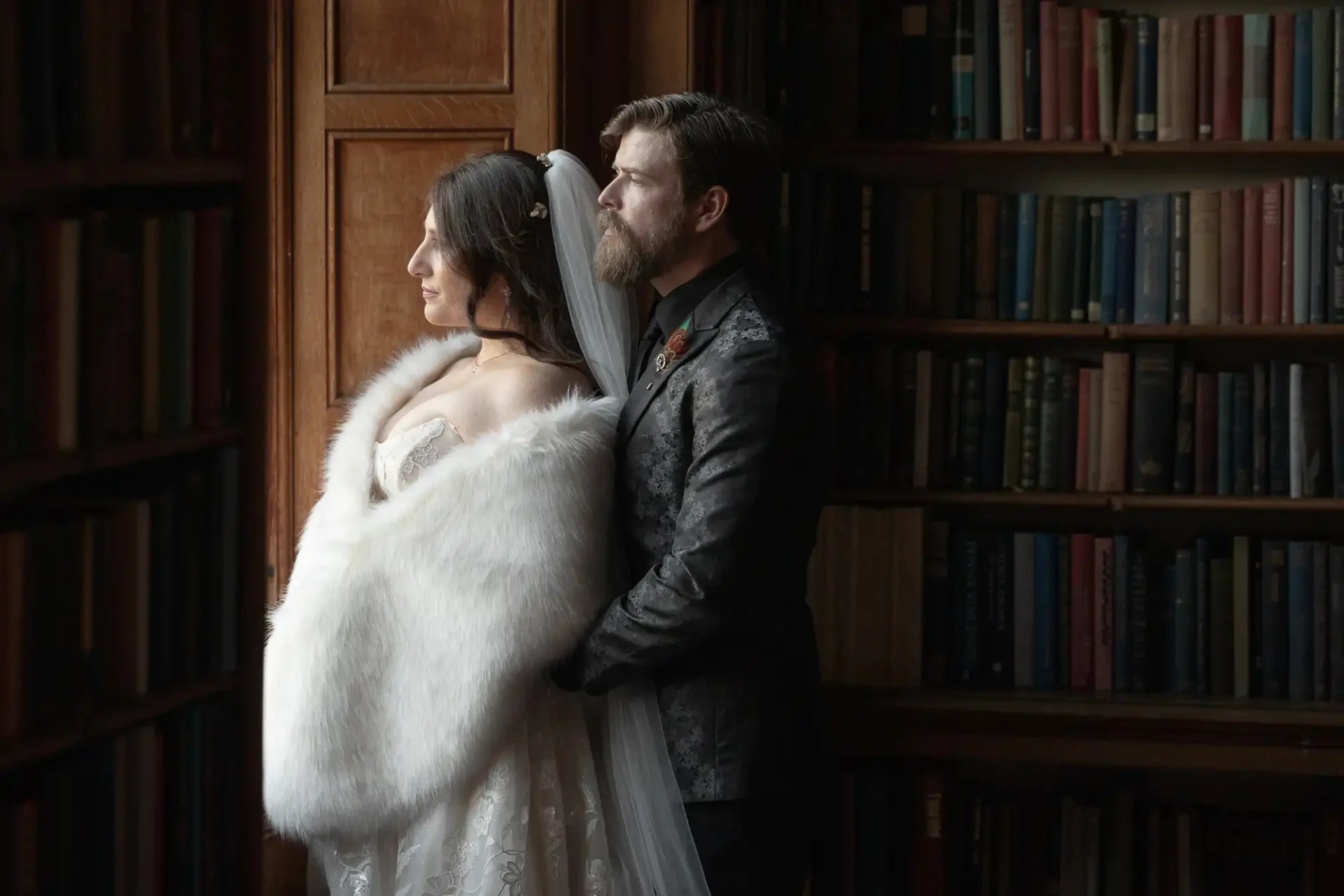
At the Royal College of Physicians of Edinburgh, we used soft window light in a darker room to draw attention to the couple while allowing the rest of the space to fall away naturally.
That kind of light adds depth and atmosphere without feeling heavily staged.
Why Window Light Works So Well
Large windows can create soft, directional light that is flattering and easy to work with, especially in historic venues where the surrounding rooms may be much darker.
The key is knowing how to expose for faces, control the background, and position the couple so the light helps the photograph rather than simply assuming any window will work.
We’ll also use flash or additional lighting when it genuinely improves the result. The goal isn’t to avoid artificial light — it’s to use whatever gives us the strongest photograph while keeping the atmosphere of the venue intact.
How We Blend Editorial and Documentary Photography Throughout a Wedding Day
The balance between documentary and editorial photography changes naturally throughout a wedding day. Some parts are best photographed almost entirely as they happen, while others benefit from a little more direction.
We don’t work to a fixed percentage. Instead, we respond to what’s happening in front of us. During the ceremony, speeches, and reception, we usually document real moments with minimal interruption. During portraits, family photographs, or selected parts of the preparations, we may step in with gentle direction when it creates a stronger image.
The aim is simple: you should be able to enjoy your wedding without feeling constantly managed for photographs, while still receiving a set of polished portraits alongside the candid moments that tell the story of the day.
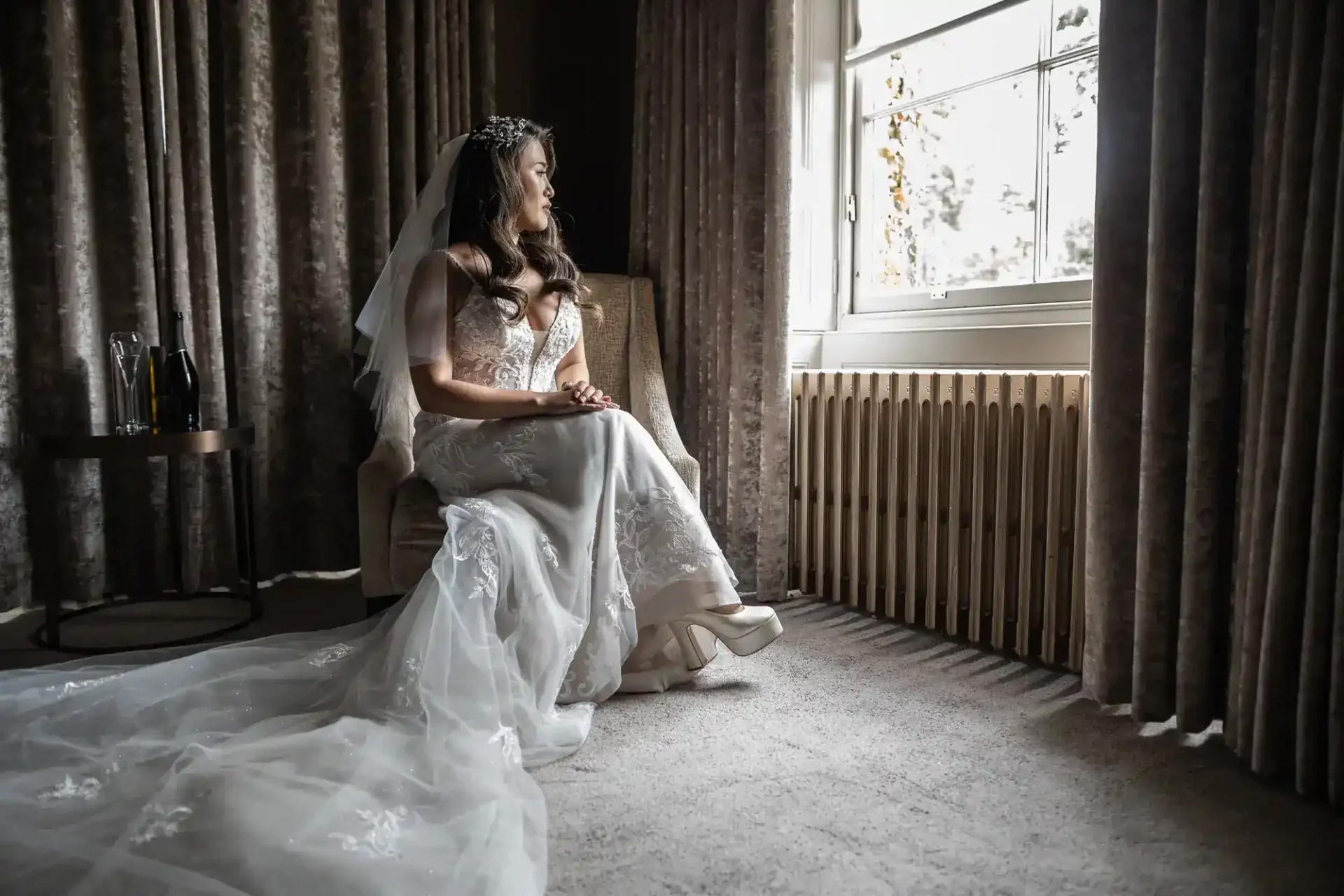
Morning Preparations: Mostly Documentary, With a Little Direction
The morning of a wedding is usually one of the most relaxed parts of the day to photograph. We spend most of it working in a documentary way, capturing the conversations, nerves, laughter and little moments happening naturally around you.
We’ll also photograph the details that matter — the dress, flowers, jewellery, shoes and anything personal you’ve chosen for the day — but we don’t want the morning to become a long styling session.
If a little direction helps, we’ll use it. That might mean moving a dress into better light, choosing a cleaner background or taking a minute for a portrait once everything is ready.
At many of the best Edinburgh wedding venues, the room itself can add a lot to these photographs, but the people and atmosphere still matter more than making every detail look like a magazine spread.
The Ceremony: Quiet, Documentary Wedding Photography
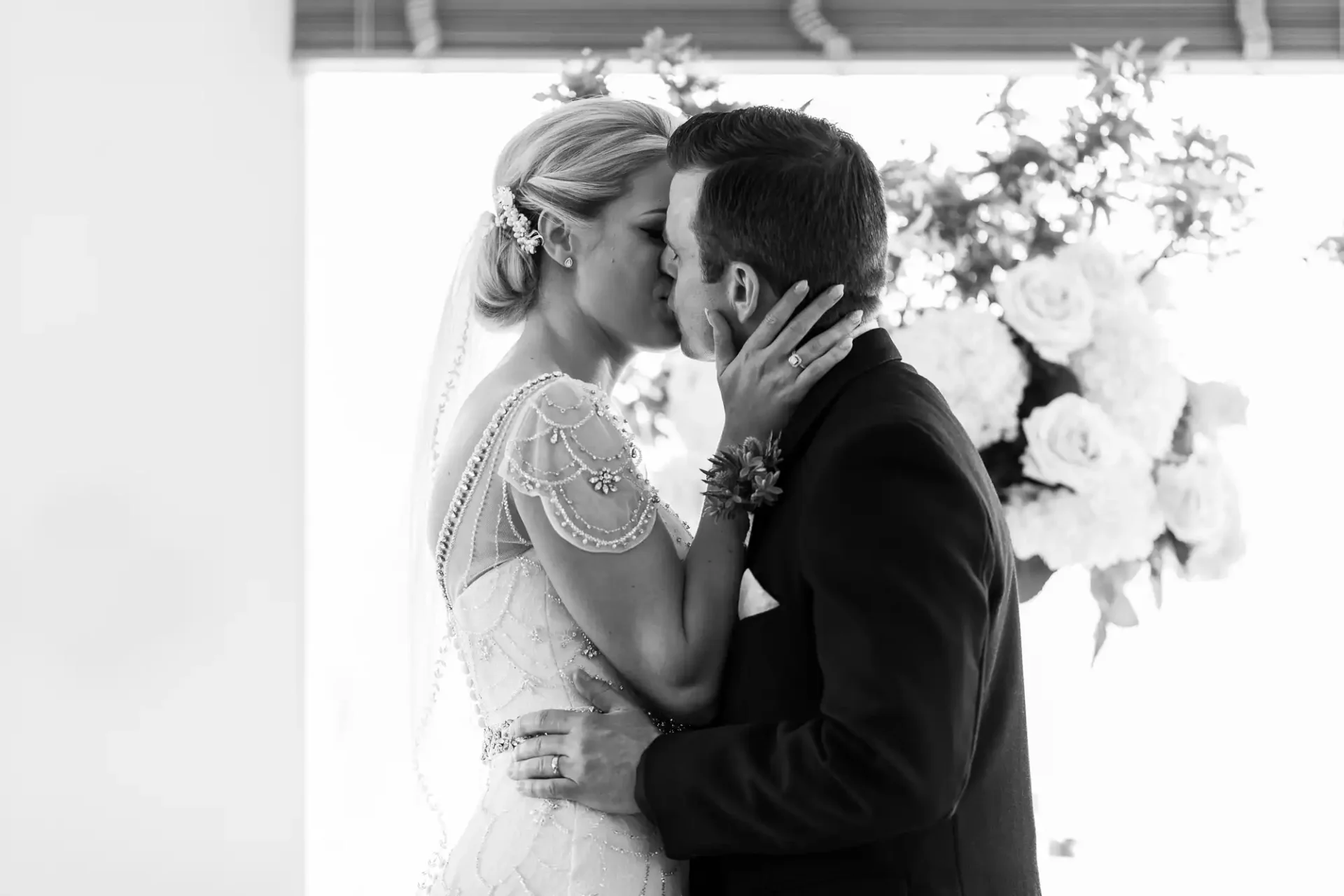
During the ceremony, our role is to document what happens without interrupting it.
We’re looking for the obvious moments — the entrance, vows, rings and first kiss — but also the reactions around them: nervous glances, tears, laughter and the expressions on family and friends that the couple may never see on the day itself.
We work as discreetly as the venue and ceremony allow, adapting to any restrictions on movement, flash or where photographers are permitted to stand.
Whether you’re marrying in a historic Edinburgh venue or planning something more adventurous such as a Glencoe elopement, the principle is the same: the ceremony should feel like a ceremony, not a photoshoot.
If you’re considering asking guests to put their phones away, our unplugged wedding ceremony guide explains the pros, cons and practicalities.
Newlywed Portraits: Where Editorial Direction Helps Most
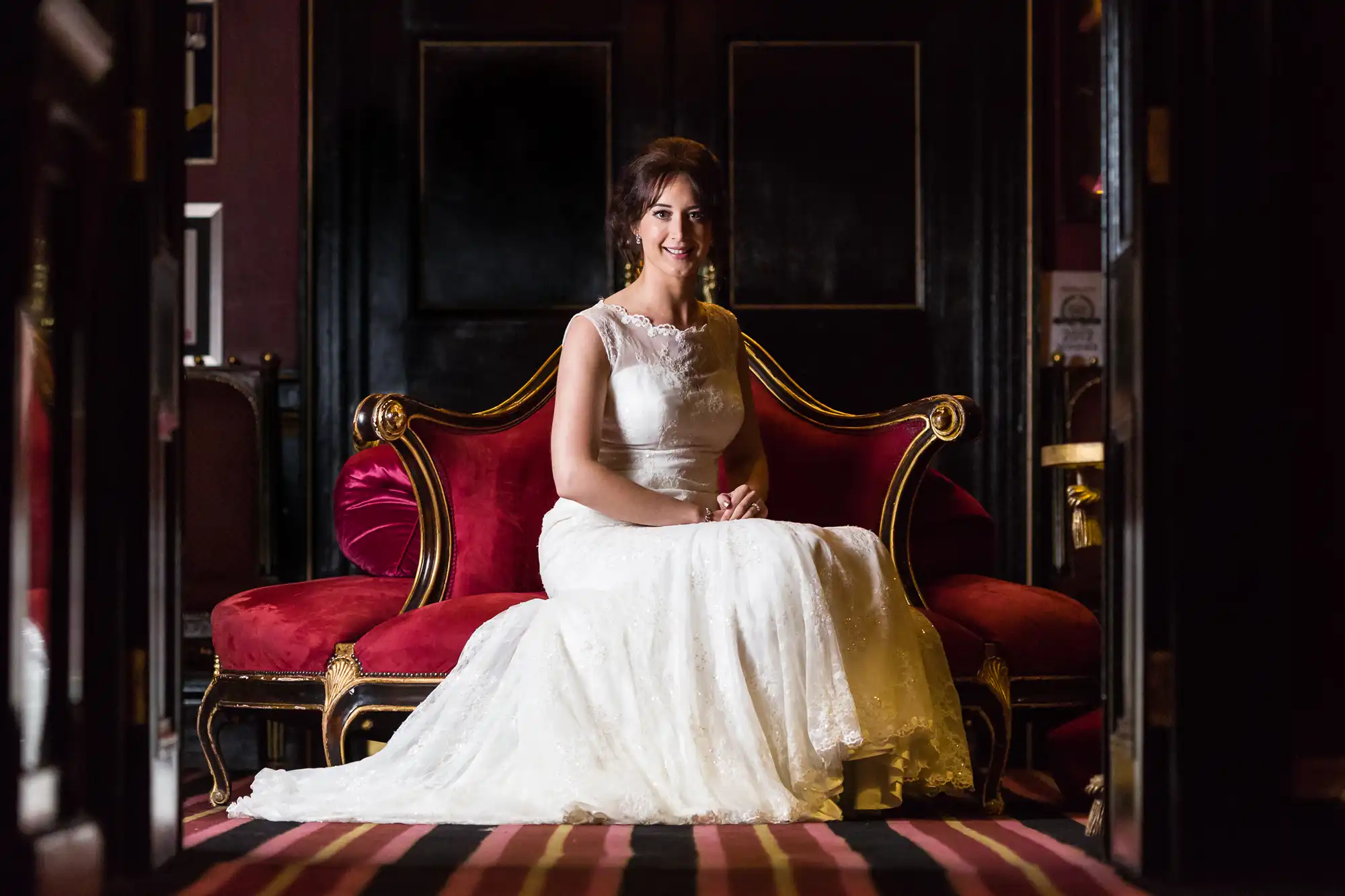
After the ceremony and drinks reception, we’ll usually take a short amount of time for portraits of the two of you.
This is where the editorial side of our approach becomes more visible. We’ll choose locations with good light, strong backgrounds or interesting architecture, then give you enough direction to create polished photographs without making the whole thing feel stiff or over-rehearsed.
We might ask you to walk together, adjust where you stand, move into better light or make a small change to your posture. The aim is to help you look comfortable and confident rather than pose you into something that doesn’t feel natural.
At venues such as Prestonfield House, there are plenty of opportunities to use the building and grounds as part of the composition without taking you away from your guests for long.
If you’re nervous about being photographed, a relaxed engagement session can be useful practice, and our guide to Edinburgh’s best photo locations shows some of the places we regularly use.
The Reception: Back to Documentary Wedding Photography
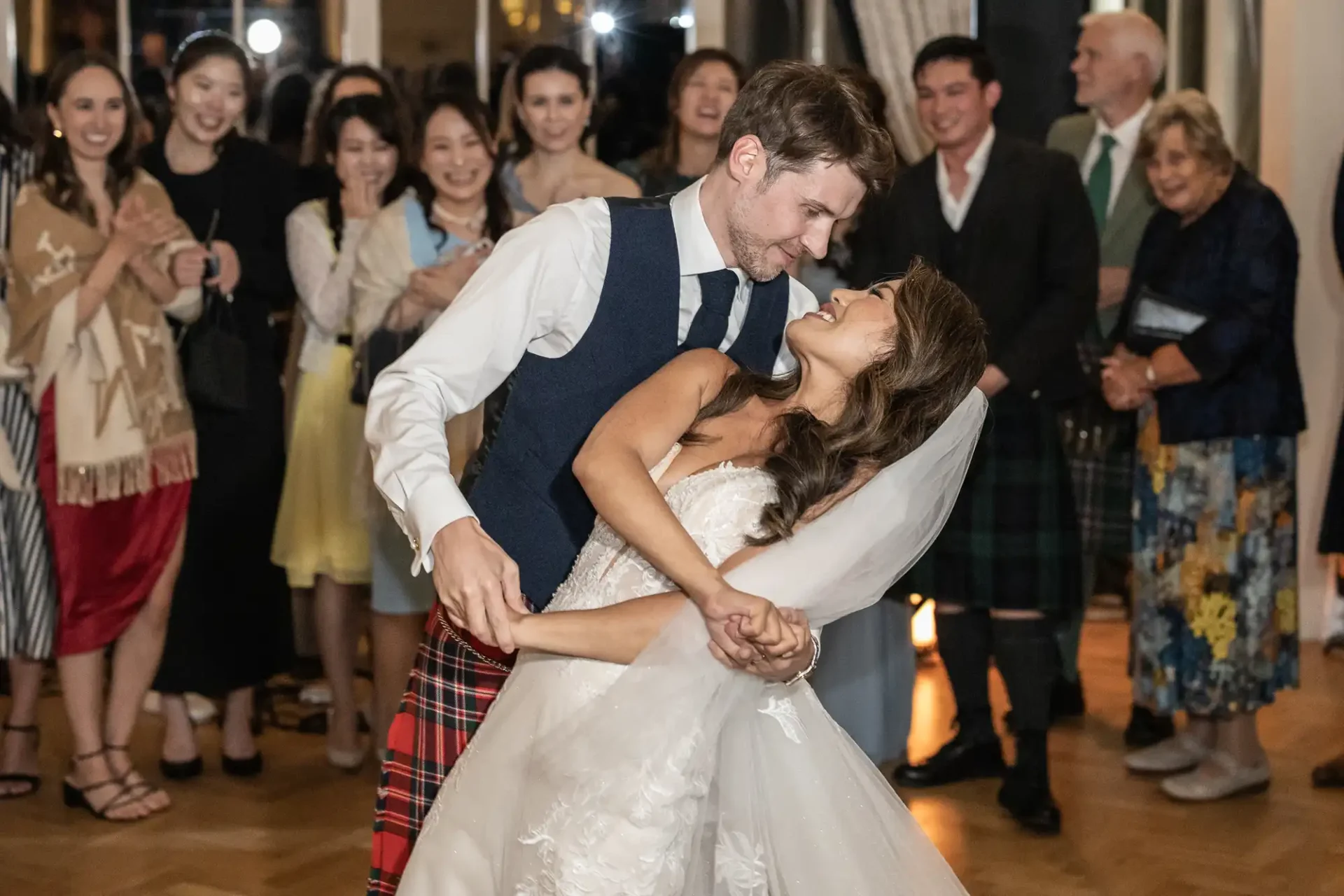
Once the reception is underway, our approach becomes almost entirely documentary again.
During the drinks reception, speeches, dinner, and evening celebrations, we watch for the interactions that happen naturally — laughter, hugs, reactions, spontaneous conversations, and everything happening around the edges of the day.
We don’t want to keep interrupting the reception to manufacture photographs. By this point, the best images usually come from letting people enjoy themselves and being ready when something genuine happens.
The evening party is often one of the least predictable parts of a wedding, which is exactly why we enjoy photographing it. The energy, movement and completely unscripted moments give the final gallery a very different feel from the more considered portraits earlier in the day.
Look Beyond the Portfolio Highlights
Editorial wedding photography can look incredible in a portfolio, but a handful of carefully selected portraits only shows one part of what a photographer delivers.
Before booking anyone, ask to see at least one complete wedding gallery. That lets you judge how consistently they photograph the whole day — preparations, ceremony, family groups, portraits, speeches, low-light interiors and the evening reception.
It’s also worth looking at weddings photographed in conditions similar to yours. A bright summer celebration at a country estate can look very different from a dark winter ceremony in Edinburgh, so consistency across different venues, seasons and lighting matters.
The strongest photographers should be able to show both sides of their work: polished portraits and the unscripted moments between them.
When comparing an editorial and documentary wedding photographer, make sure the full galleries show both sides of their work consistently — not just a handful of carefully selected portraits.
If you’re comparing photographers, our guide to choosing an Edinburgh wedding photographer explains what else we’d look for before booking.
When Two Wedding Photographers Add Value
Two photographers can add real value, but they aren’t essential for every wedding.
The main advantage is simultaneous coverage. While one of us is photographing the couple, the other can stay with the guests. During preparations, we can cover both sides of the morning at once. During the ceremony, we can work from different positions without moving around as much.
That extra perspective is particularly useful at larger weddings, busy venues or days with several things happening at once.
For smaller celebrations, one experienced photographer may be more than enough. The right choice depends on the size of the wedding, the timeline and how much simultaneous coverage matters to you.
We’ve explained the pros and cons in more detail in our guide to having two wedding photographers.
Frequently Asked Questions About Editorial and Documentary Wedding Photography
What is the difference between documentary and editorial wedding photography?
Documentary wedding photography captures real moments as they happen with minimal intervention. We watch for reactions, laughter, hugs, and everything unfolding naturally around us.
Editorial wedding photography is more deliberate. We use light, composition, location and gentle direction to create polished portraits while still keeping you relaxed and looking like yourselves.
Our approach combines both rather than forcing the whole wedding into one style.
Will you pose us for our wedding photographs?
We prefer gentle direction rather than rigid posing.
During portraits, we might suggest where to stand, ask you to walk together, adjust your position for better light or give you a little guidance if you’re unsure what to do. The aim is to create strong photographs without making you feel as though you’re performing for the camera.
For most of the rest of the day, we step back and photograph what happens naturally.
How long do you normally need for newlywed portraits?
We usually prefer a short, relaxed portrait session rather than disappearing for hours.
The exact time depends on the venue, weather, light and how much variety you want, but we’ll normally work efficiently and keep you close to your guests wherever possible.
If the light becomes particularly good later in the day, we may suggest slipping away again for a few minutes rather than trying to create everything in one long session.
What happens if it rains on our wedding day?
We adapt.
After photographing hundreds of weddings in Scotland, we’re very used to plans changing because of rain, wind or poor light. We’ll use indoor architecture, staircases, windows, doorways and covered areas where appropriate, and we’re equally comfortable using flash or additional lighting when it improves the photograph.
If the weather breaks, we can take advantage of it without turning the day upside down.
Do you photograph small weddings and elopements?
Yes. We photograph everything from intimate city ceremonies and elopements to large full-day weddings.
The balance between documentary and editorial photography works particularly well for smaller celebrations because we can keep the coverage unobtrusive while still creating a few considered portraits when the opportunity arises.
If you’re planning something smaller, our Edinburgh elopement guide covers venues, logistics and photography ideas in much more detail.
Do we need two photographers for this style of wedding photography?
No. One experienced photographer can provide excellent editorial and documentary coverage.
Two photographers become particularly useful when you want simultaneous coverage — for example, both sets of morning preparations, multiple ceremony angles, or guest photographs while the couple are away for portraits.
Our two wedding photographers guide explains when the extra coverage genuinely adds value.
Like Our Editorial and Documentary Approach?
If you like the idea of a wedding gallery that combines natural, candid storytelling with polished editorial portraits, Claire and I would love to photograph your day in the same relaxed way.
After more than 700 weddings since 2006, we know when to stay unobtrusive and let moments unfold, and when a little direction will create a stronger photograph without making the day feel staged.
Tell us a little about what you’re planning, and we’ll check our availability, answer any questions and help you work out what suits you best.There’s no pressure or obligation, and we usually reply within 24 hours.
Related Reading
- How to Choose an Edinburgh Wedding Photographer — what to compare when looking at style, full galleries, experience, pricing and personality.
- The Benefits of Documentary-Style Wedding Photography — a deeper look at candid, reportage and unobtrusive wedding photography.
- Do You Need Two Wedding Photographers? — when two photographers add useful simultaneous coverage and when one may be enough.
- Edinburgh Wedding Photography Prices & Packages — compare our current coverage options and pricing.
- Wedding Photography Portfolio — see more examples of our editorial portraits and documentary wedding photography.
